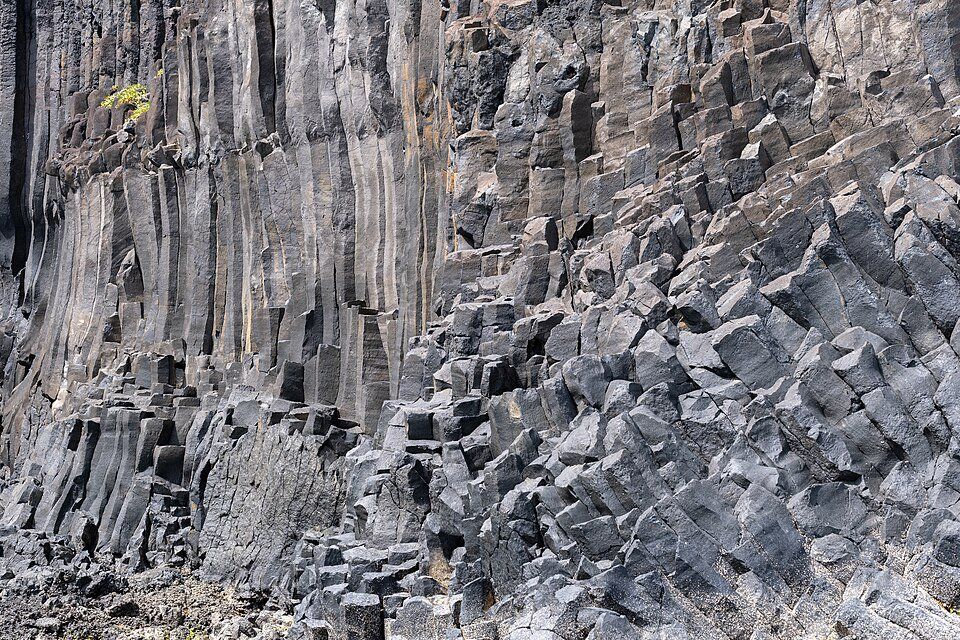
Born of fire
Igneous
Molten rock cools and locks into crystals. Slow cooling deep underground grows large ones; a fast chill at the surface leaves barely any at all.
- Granite
- Basalt
- Obsidian
- Pumice
A field guide for young geologists
Fire, water, and pressure each leave a signature you can learn to read. Start with the three families, then test yourself — no hammer required.
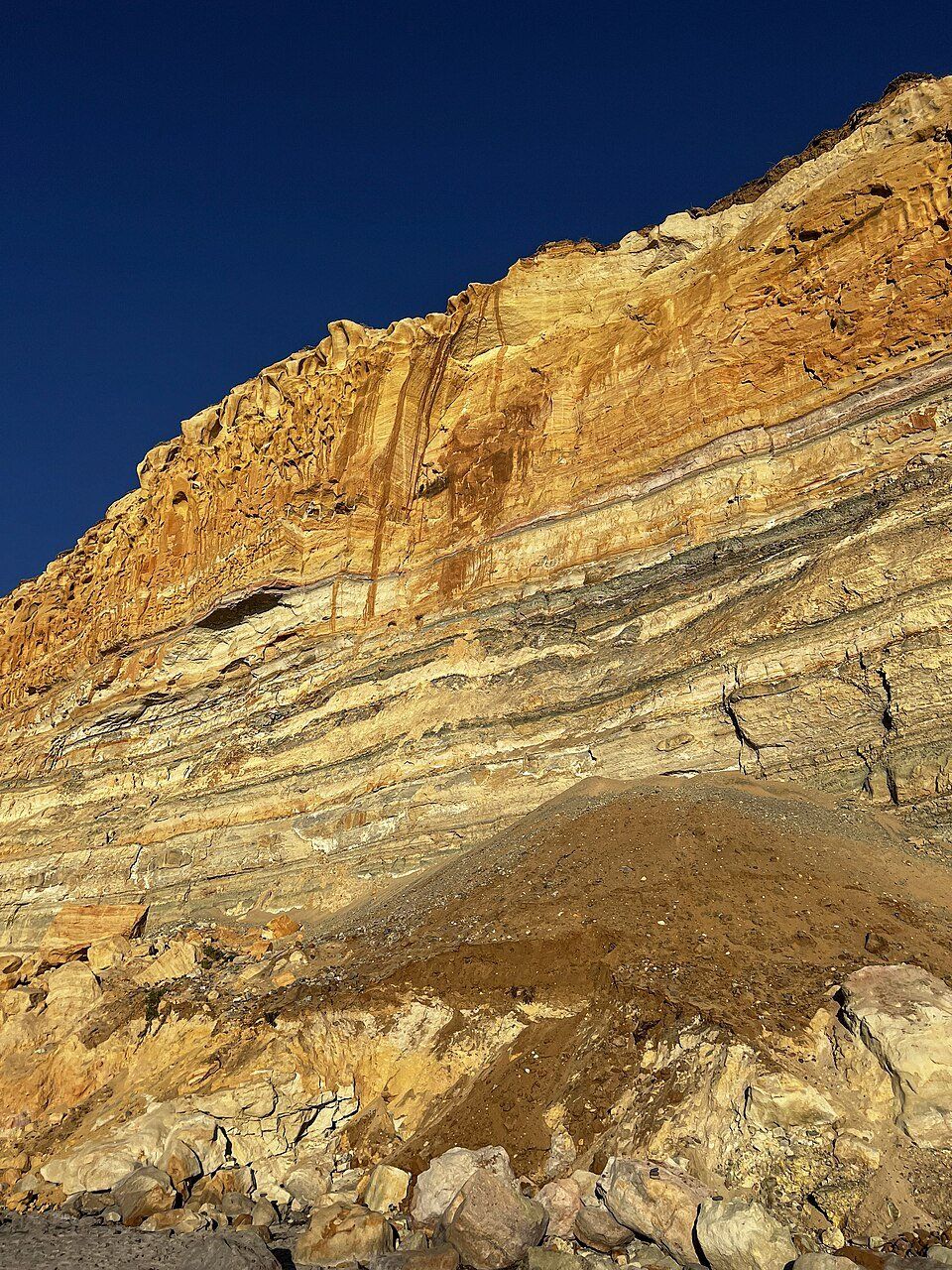
Sandstone strata in a sea cliff — youngest layer on top.
01 — Classification
Every rock on Earth belongs to one of these, and any of them can become another given enough time. Geologists call that loop the rock cycle.
Born of fire
Molten rock cools and locks into crystals. Slow cooling deep underground grows large ones; a fast chill at the surface leaves barely any at all.
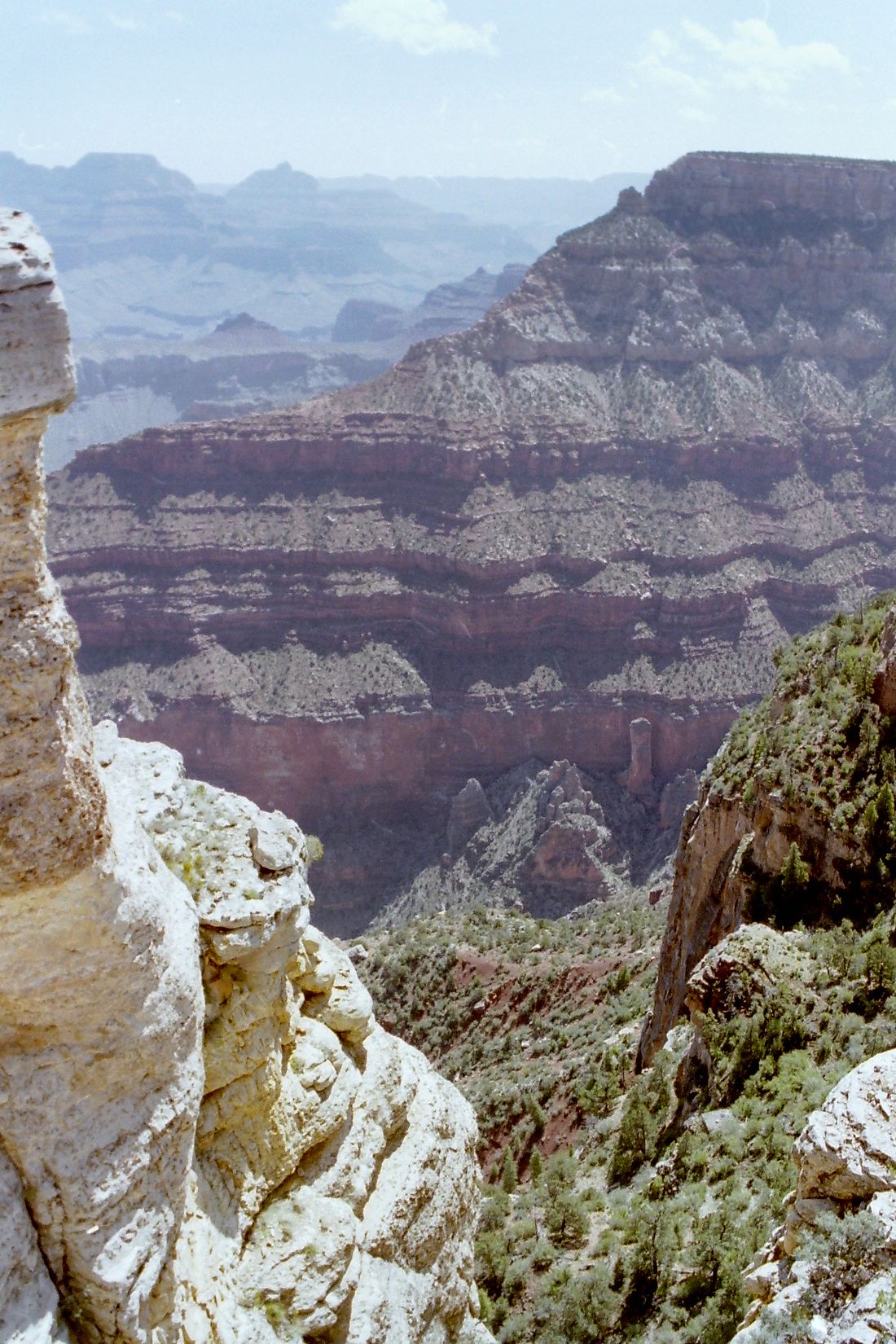
Built in layers
Sand, silt, and the shells of sea creatures settle, stack, and compact. Each band is a slice of time — which is why canyon walls read like pages.
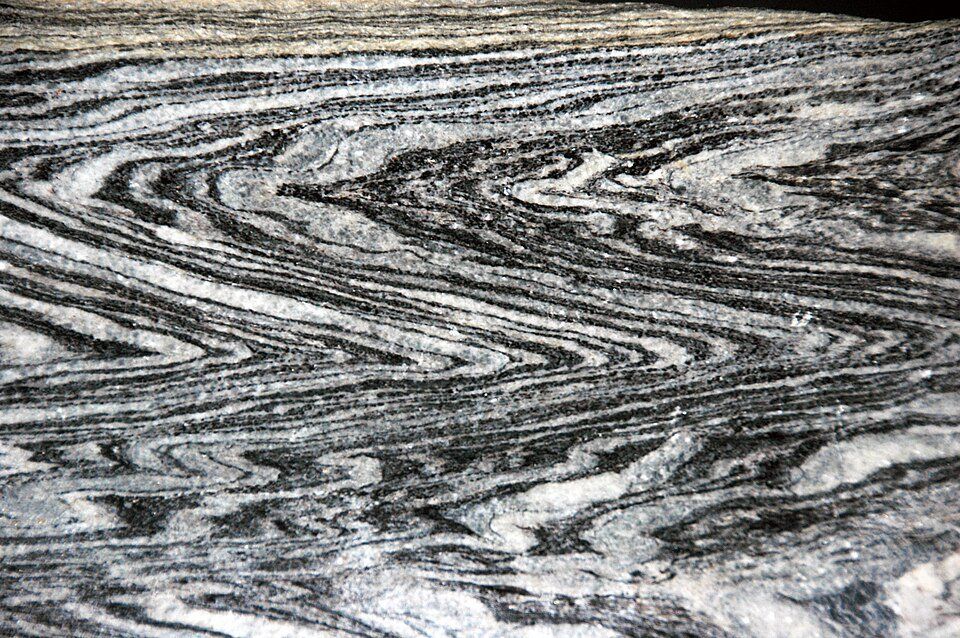
Changed under pressure
Bury a rock deep enough and heat and pressure rearrange it without ever melting it. Limestone recrystallises into marble; shale hardens into slate.
02 — Specimen of the day
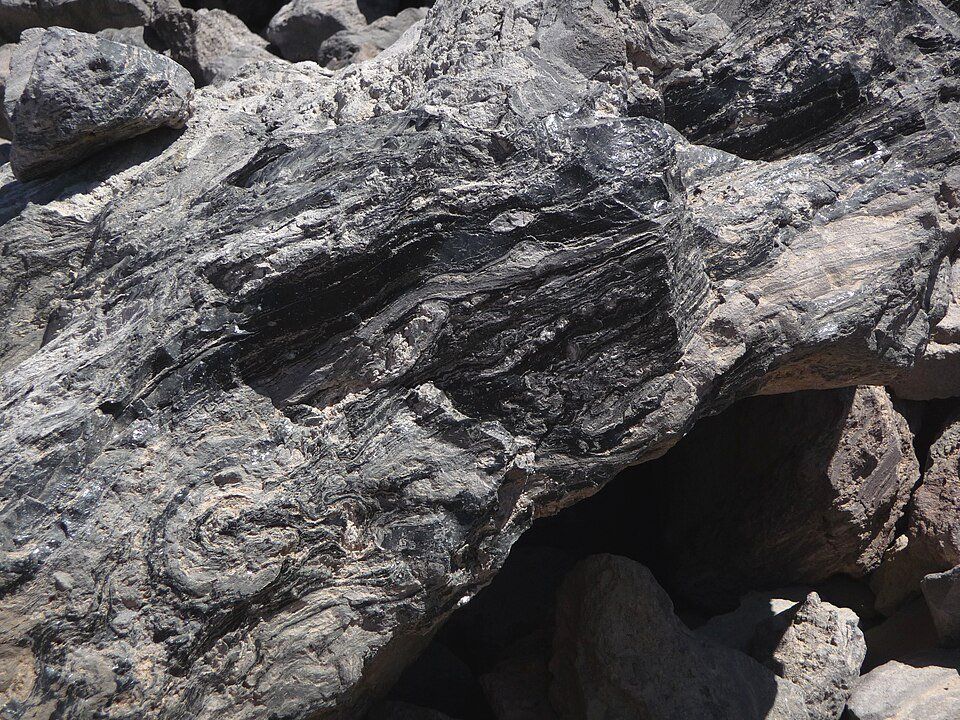
Igneous
Volcanic glass. Lava cooled so quickly that crystals never had time to form, leaving a smooth, dark surface that fractures into edges sharper than a surgical blade — which is exactly what ancient toolmakers wanted.
03 — Field facts
The age of the oldest rocks yet found on Earth — nearly as old as the planet.
It traps so much volcanic gas that rafts of it can drift across entire oceans.
Roughly where diamonds crystallise, under heat and pressure hard to imagine.
Much of it is built from the shells and skeletons of ancient sea creatures.
The Mohs scale ranks minerals by what can scratch what.
A dull grey lump outside; a cavity lined with crystals once it's opened.
04 — Check yourself
05 — In the field
An egg carton or a partitioned box stops softer specimens from being scratched.
Where a rock was found is half its story. Note the date and place before you forget.
A fingernail, a copper coin, a steel nail, a piece of glass — in that order, hardest last.
Ask permission on private land, and never chip at protected outcrops or park formations.